


I was on a walk, talking into my phone, when I realized I couldn’t say what I wanted to say with one word.
Not “AI.” Not “art.” And definitely not “aura,” which sounds precious until you actually need it.
The online debates about AI and creative work have a quality I find exhausting. Not because they’re wrong exactly, but because they’re fighting over the wrong thing. Someone posts an image made with Midjourney. Someone else calls it theft. A third person calls the second person a Luddite. The whole thread calcifies around a single contested noun: is it art or isn’t it?
That question has its uses. But I think it’s been doing the work of three separate questions, and until we pull those apart, the argument generates more heat than clarity.
Those three questions are about craft, aura, and art. They’re not the same thing.
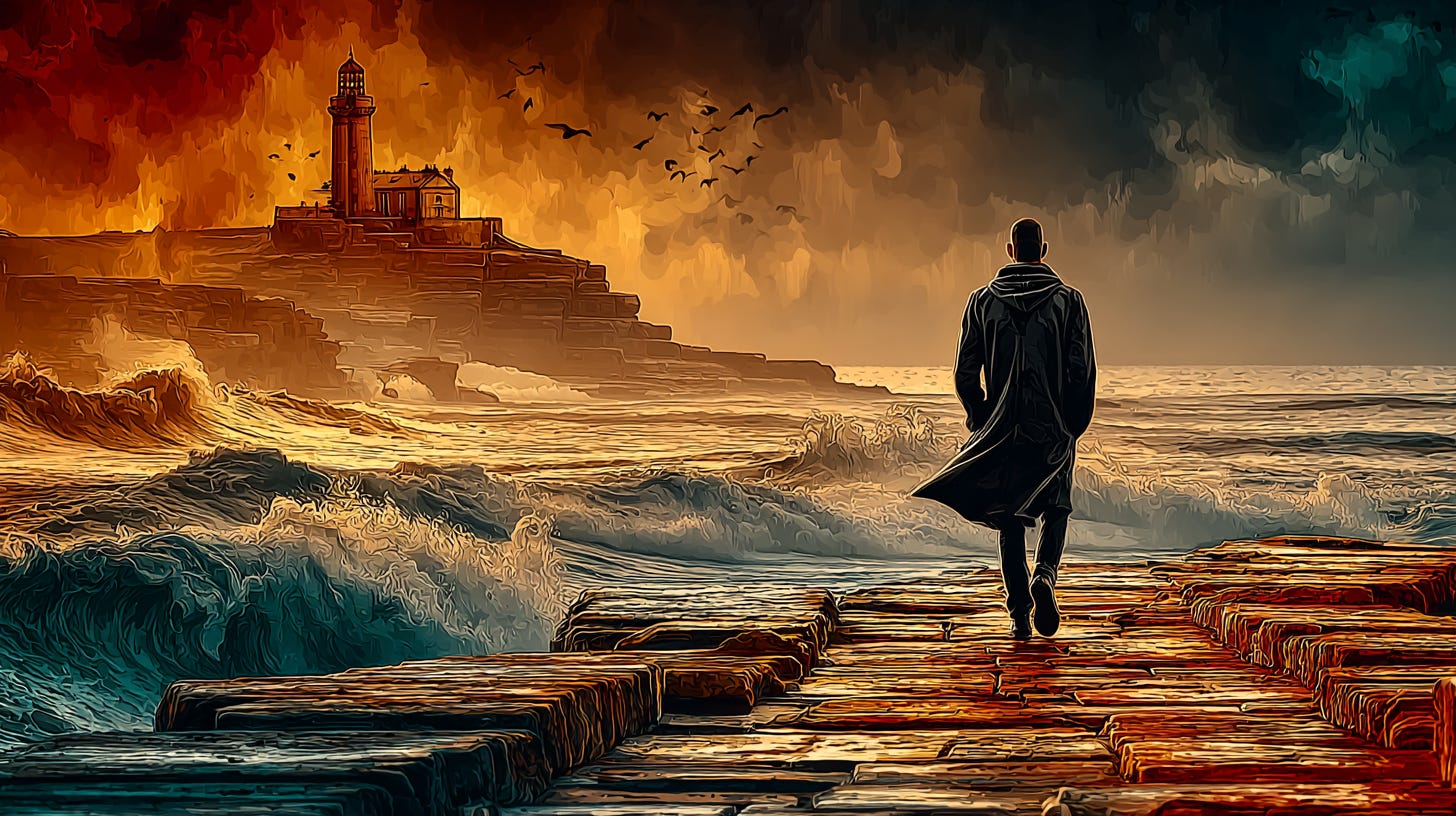
Craft is skill. That’s where the word comes from.
“Art” and “craft” trace back through two different language branches, one Latin-rooted, one Germanic, but they arrive at the same meaning: skill. That shared etymology is a reminder that historically, we didn’t separate skilled making from art-making the way we sometimes do now.
Craft, for our purposes, is the skill dimension of creative work. Knowing how to do the thing. Managing the material: whether that material is clay, paint, type, code, or language. Recognizing what your medium will and won’t do. Building through practice until judgment becomes fast. Craft is learnable and improvable. It’s also possible to evaluate with some consistency: this sentence is clearer than that one; this glaze breaks better in reduction.
That definition matters because when people say AI outputs are bad, they’re usually making a craft argument: the prose is generic, the images are blurry at the fingers, the music lands nowhere. Those are real craft failures, worth naming. A tool doesn’t excuse them.
Aura is something else entirely.
This is the concept I want to spend the most time on, because it does the most work in the argument and gets almost no airtime on social media.
The term comes from Walter Benjamin’s 1935 essay on mechanical reproduction, but the underlying idea doesn’t require the essay. Two art professors of mine, Gaye Chan and Andrea Feeser, introduced it more simply: aura is the perception that surrounds an object beyond its mere objectness. Beyond the canvas and paint. Beyond the execution. The ambiance, historical weight, and felt presence that makes one piece matter in a way another technically comparable piece does not.
Think of why a Rembrandt costs what it costs. The craft is real. But craft alone doesn’t explain the price, the silence in front of it, or the forgeries that fail even when they’re technically excellent. What they lack is aura. The singular presence, the specific history, the sense that this object comes from somewhere particular and arrived here through an unrepeatable path.
Here’s the part people miss: authenticity is a component of aura, but it’s not the whole of it. A work can be genuinely inauthentic, a known copy, a fictional persona, a declared performance, and still carry powerful aura. Sometimes the inauthenticity itself becomes part of the aura, what you might call “authentically inauthentic.” I’ve seen this demonstrated in ways I’ll come back to in a later post.
Aura explains something craft alone cannot: why so much AI-generated content falls flat even when it’s technically proficient. The output can clear every craft bar and still feel like it comes from nowhere and points nowhere. No story. No particular mind behind it that made choices for reasons we can understand or argue with. It was produced rather than excavated.
That’s an aura failure, not a craft failure.
Art is where we argue.
Art is the contested category, the one where craft and aura, in varying combinations and weights, may or may not add up to something that culture decides to call Art. Graphic designers in the QuarkXPress era fought bitterly over whether computer-aided layout could be called art. Some argued yes; some argued it was only craft; some argued neither. The teachers I had at the University of Hawaii at Manoa didn’t give us answers. They taught us to live with the question, which I think is more honest about how it actually works.
Art is where the social negotiation happens. It’s not a property of the object in isolation. It’s what a community decides to invest meaning in. That community changes. Its criteria change. The category has always been porous and has always been fought over by people with real stakes.
So when someone on Reddit argues about whether an AI piece is “real art,” they’re not wrong to ask the question. But they’re usually asking it without first settling the craft question or the aura question, which makes the argument nearly impossible to resolve. You can disagree about art almost indefinitely because it’s a social and historical category. You can make more traction on craft (is this technically accomplished?) and on aura (does this carry presence, story, intention?).
What the fights are actually about
Most online arguments about AI and art are misaligned on these three axes in predictable ways.
The “AI is just a tool” camp often wins the craft argument and loses the aura argument. A skilled human can use AI to produce technically accomplished work. That doesn’t automatically answer whether the work has aura, and it doesn’t settle the art question.
The “AI is theft” camp often has an aura intuition they haven’t named. They sense that something is missing—the biography, the struggle, the reason behind it—and they’re not entirely wrong. But the theft framing aims at the wrong target. Graphic design appropriates fonts, photographs, and color systems made by other people. It’s always done this. The question isn’t whether you built your material from scratch. It’s what you did with it and whether the result carries meaning.
Economic predictions about AI replacing artists deserve their own conversation. But they tend to conflate capability with culture. A system can produce competent output without that output mattering to anyone.
None of these fights are stupid. They all point toward something real. They’re just misaligned with the questions they’re actually trying to answer.
Three words, not one verdict
What I’m proposing here is a vocabulary, not a verdict on AI. Asking craft, aura, and art as separate questions doesn’t settle the debates. It makes them trackable, which is a start.
Most AI output has mediocre craft and almost no aura. That’s an honest assessment. I used it to write this article and, you, the reader might think this article has no Aura. Yet, a lot of entirely human-made work has mediocre craft and almost no aura too. The tool isn’t the verdict. What you make with it, and whether the result carries a reason for existing, is still on you.
I want to work through these ideas over several posts, getting more specific: into stories, legal frameworks, and the practical question of what it actually means to work at the level of craft with a language model. But the framework comes first. Keep these three questions separate, and the debates become arguments you can actually follow.