


NB: I base my archetype in focus articles on the ARAS archetypes that are highlighted each month. You can find ARAS on Patreon.
The Power That Carries Us
Across cultures and millennia, the horse has stood beside humanity as both companion and mirror. Few animals have shaped civilization as directly. Harnessed to plows, yoked to chariots, and ridden across continents, the horse extended the reach of the human body. Through the horse we moved faster, traveled farther, fought harder, and dreamed bigger. Yet the symbolic life of the horse has always exceeded its practical function. It is not merely an animal in myth and imagination. It is a force.
The horse represents energy that carries consciousness forward. It is motion, instinct, vitality, and drive. In the human psyche it corresponds to those powerful currents beneath deliberate thought—the impulses, passions, and desires that surge up from deeper layers of being. These forces are neither inherently noble nor destructive. They are simply powerful. Like a spirited horse beneath a rider, they require relationship.
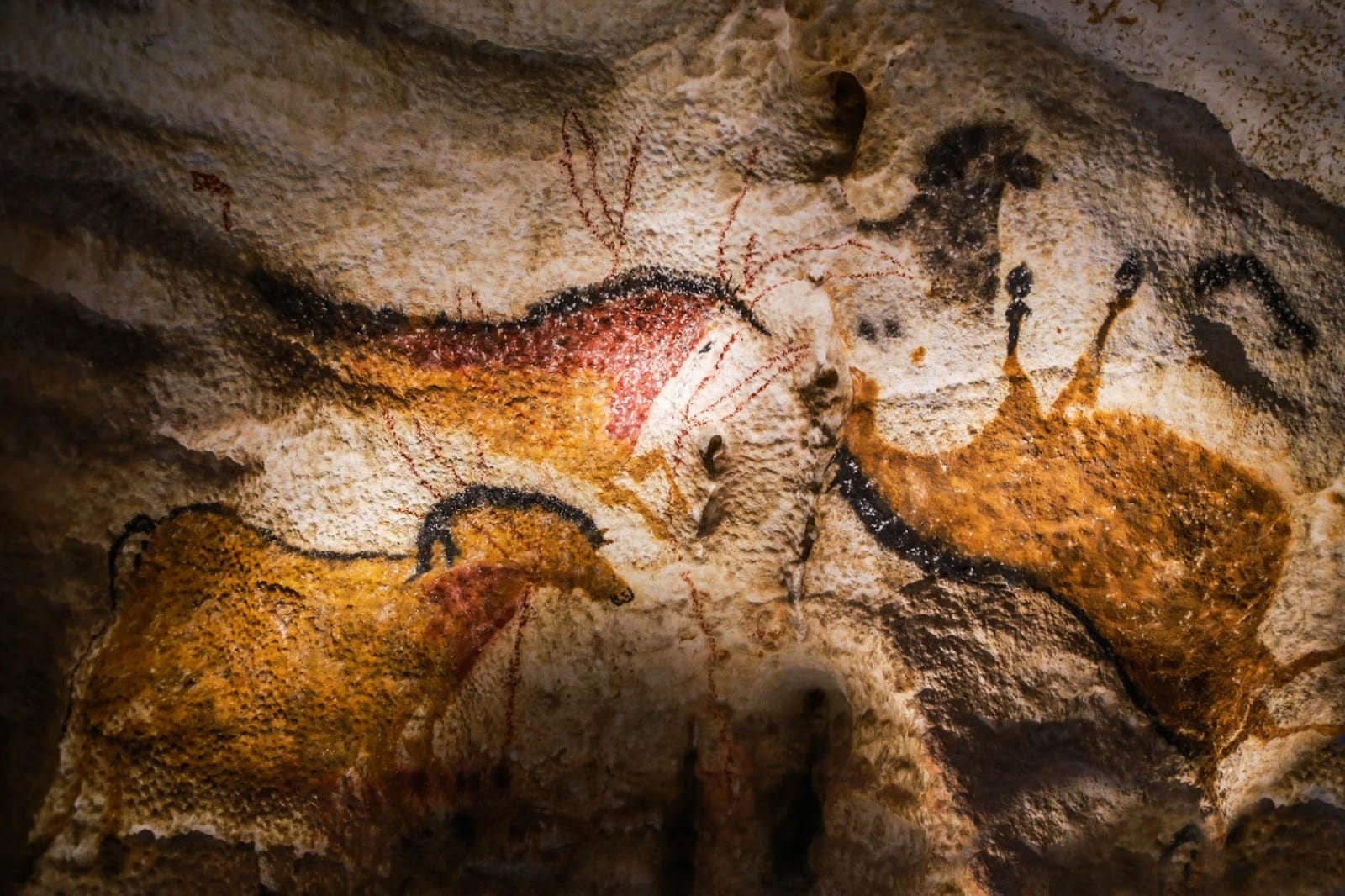
Human culture has long recognized this tension. The horse offers freedom, but that freedom comes with danger. The same energy that pulls the plow and carries the traveler across open land can also bolt into chaos if mishandled. For this reason the horse frequently appears in myth as a creature that must be bridled, guided, or sacrificed. Ancient rituals surrounding horses were not merely agricultural or political acts; they were symbolic attempts to regulate power itself.
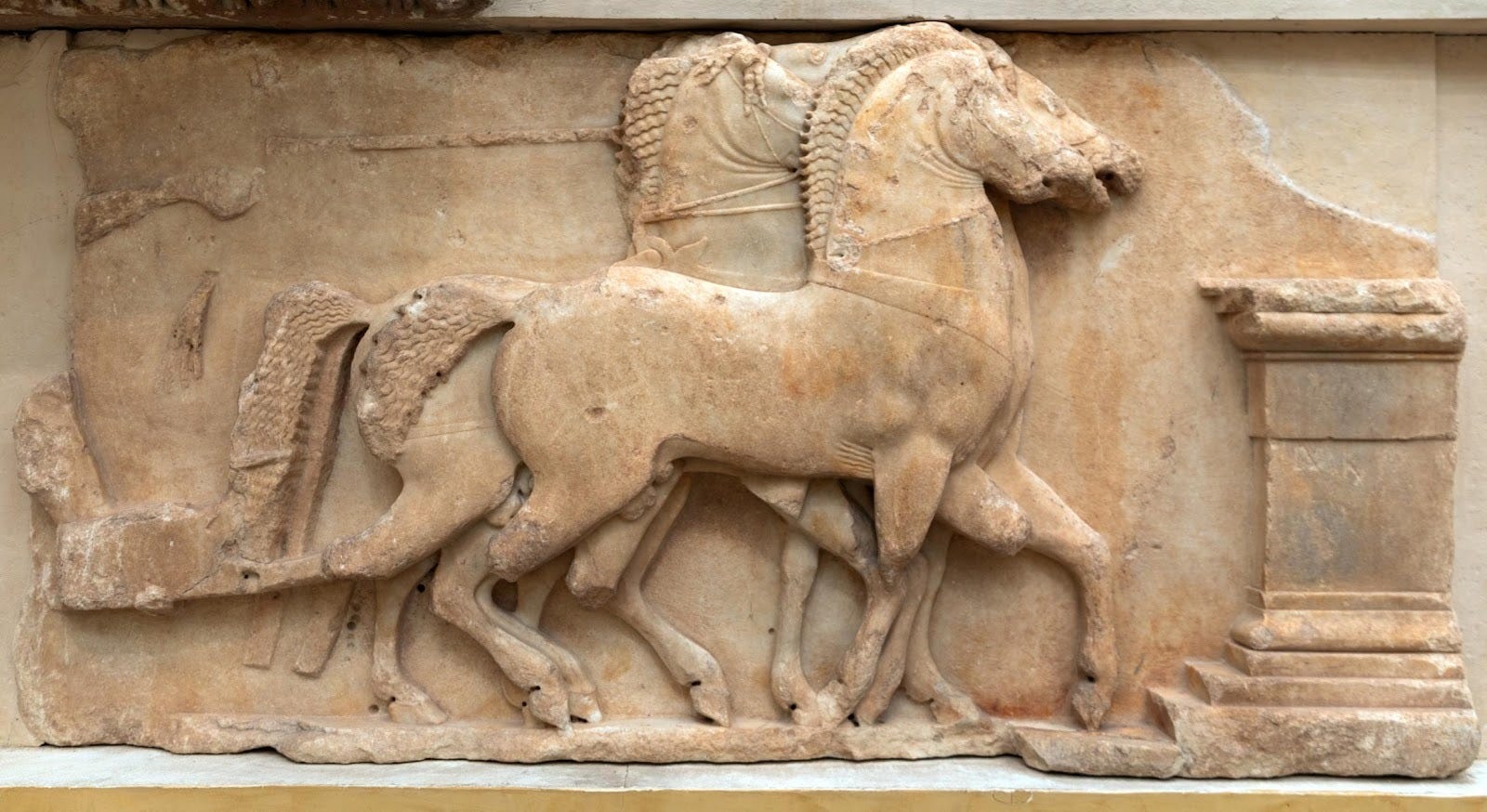
In this sense the horse is an archetype of the vital energies that move through human life. It represents the striving force that pulls us beyond our limits. But it also asks a question: who is riding whom?
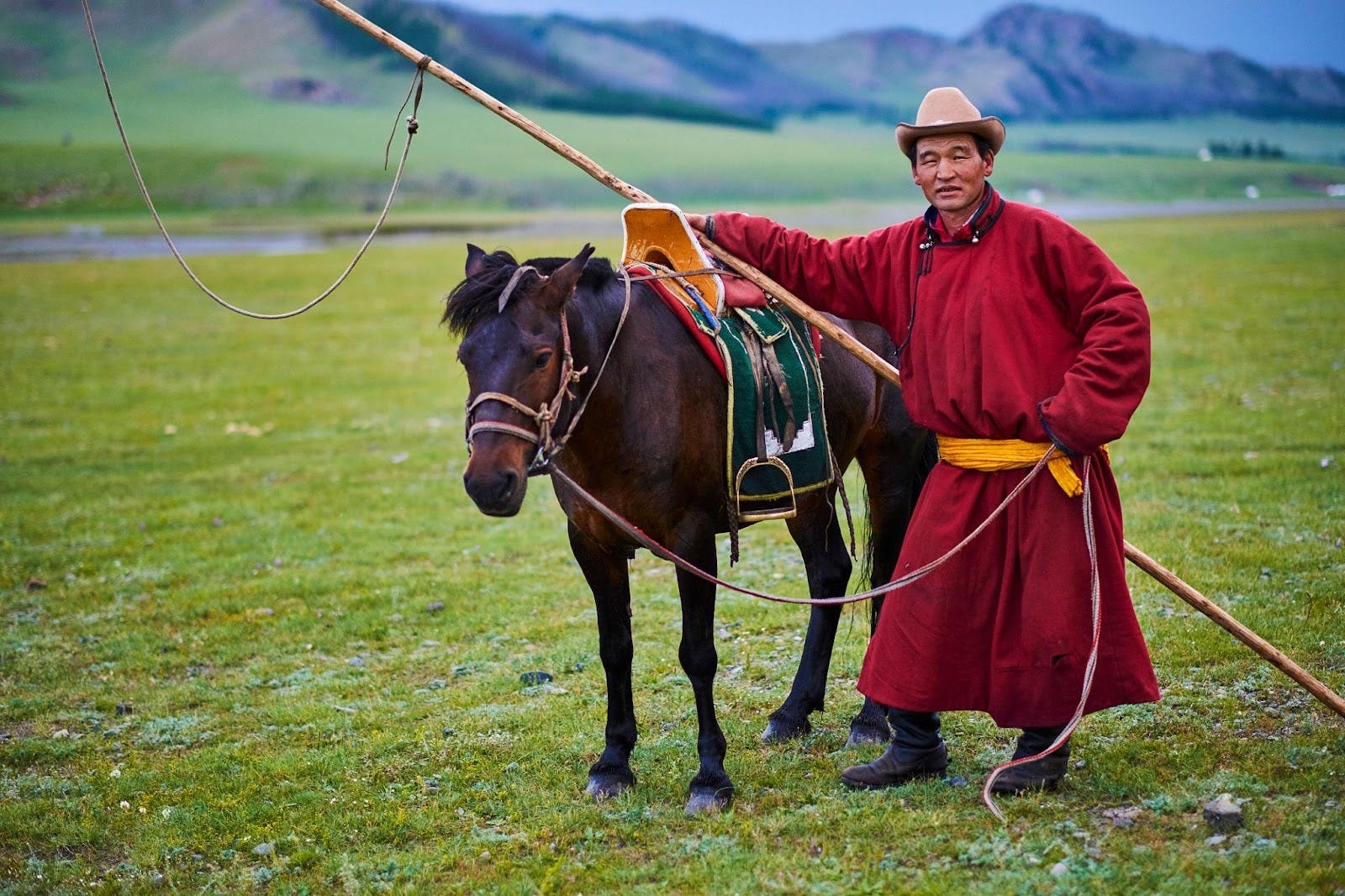
To explore the horse archetype is to explore the relationship between instinct and consciousness, power and guidance, movement and direction. Throughout mythology and ritual, horses appear wherever humanity grapples with the management of life force itself. Astrology offers another lens for understanding this dynamic, mapping similar themes across the symbolic sky.
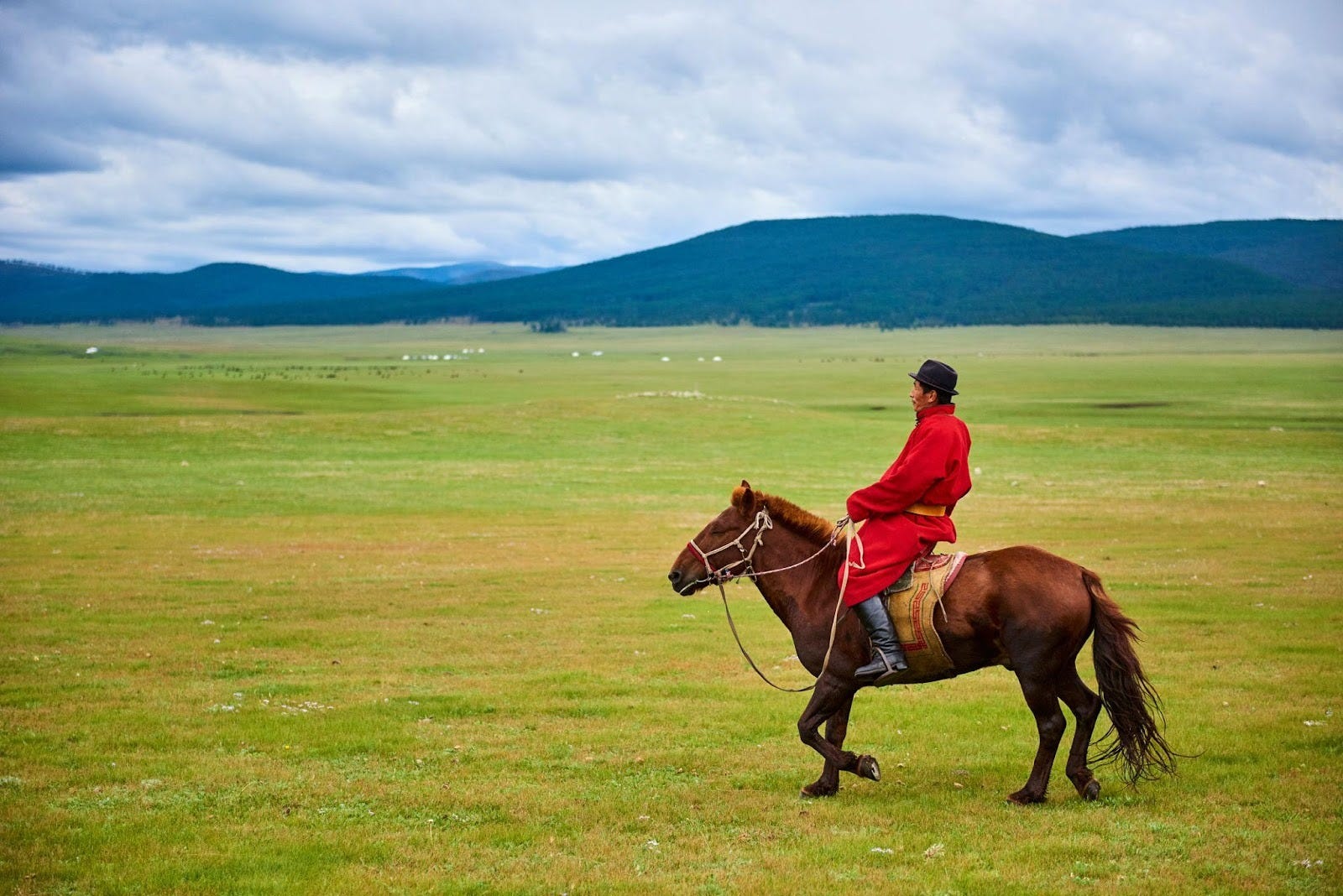
The horse, then, is not only an animal of the earth. It is a living metaphor for the energies that carry human destiny forward.
Cultural and Symbolic Expressions of the Horse
Human cultures have consistently portrayed horses as creatures standing at the threshold between the ordinary world and something larger. Their speed and strength made them indispensable in daily life, yet their symbolic associations quickly extended beyond practicality into myth, religion, and cosmology.
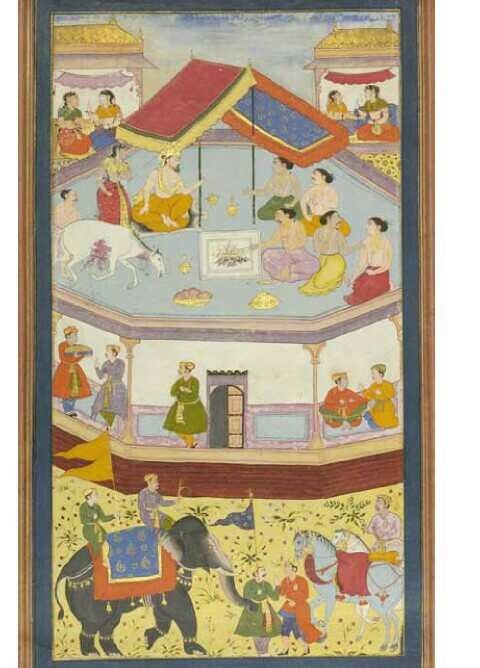
One of the most powerful ritual expressions of the horse appears in the ancient Vedic ceremony known as the Ashvamedha, the royal horse sacrifice. In this ritual, a king released a sacred horse to wander freely for a year, accompanied by warriors who protected it as it crossed neighboring territories. Any ruler who stopped the horse challenged the sovereignty of the king who released it. At the end of the journey, the horse was ritually sacrificed.
To modern sensibilities, the sacrifice can appear brutal. But symbolically it expressed a profound recognition: political power, vitality, and sovereignty must ultimately be offered back to the sacred order of life. The horse embodied the king’s vitality and authority, and its sacrifice restored balance between human ambition and cosmic law.
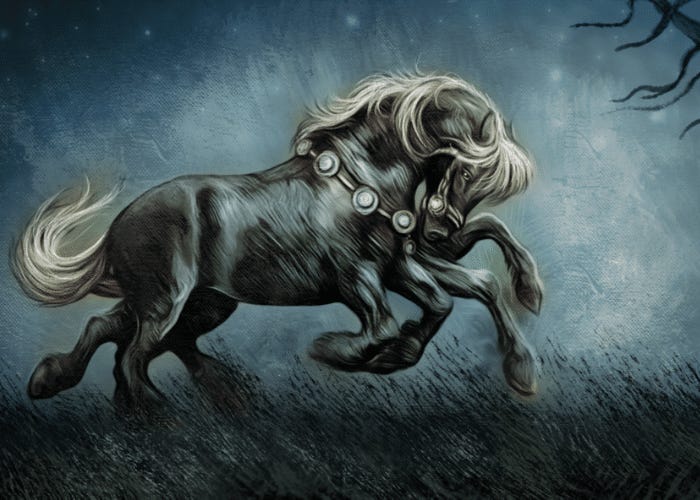
Greek mythology also reveals the horse’s connection to forces beyond ordinary human control. The sea god Poseidon was believed to have created the horse, linking the animal to elemental power and unpredictable movement. Horses were thus associated with earthquakes, storms, and surging waters—forces that cannot be contained by human will.
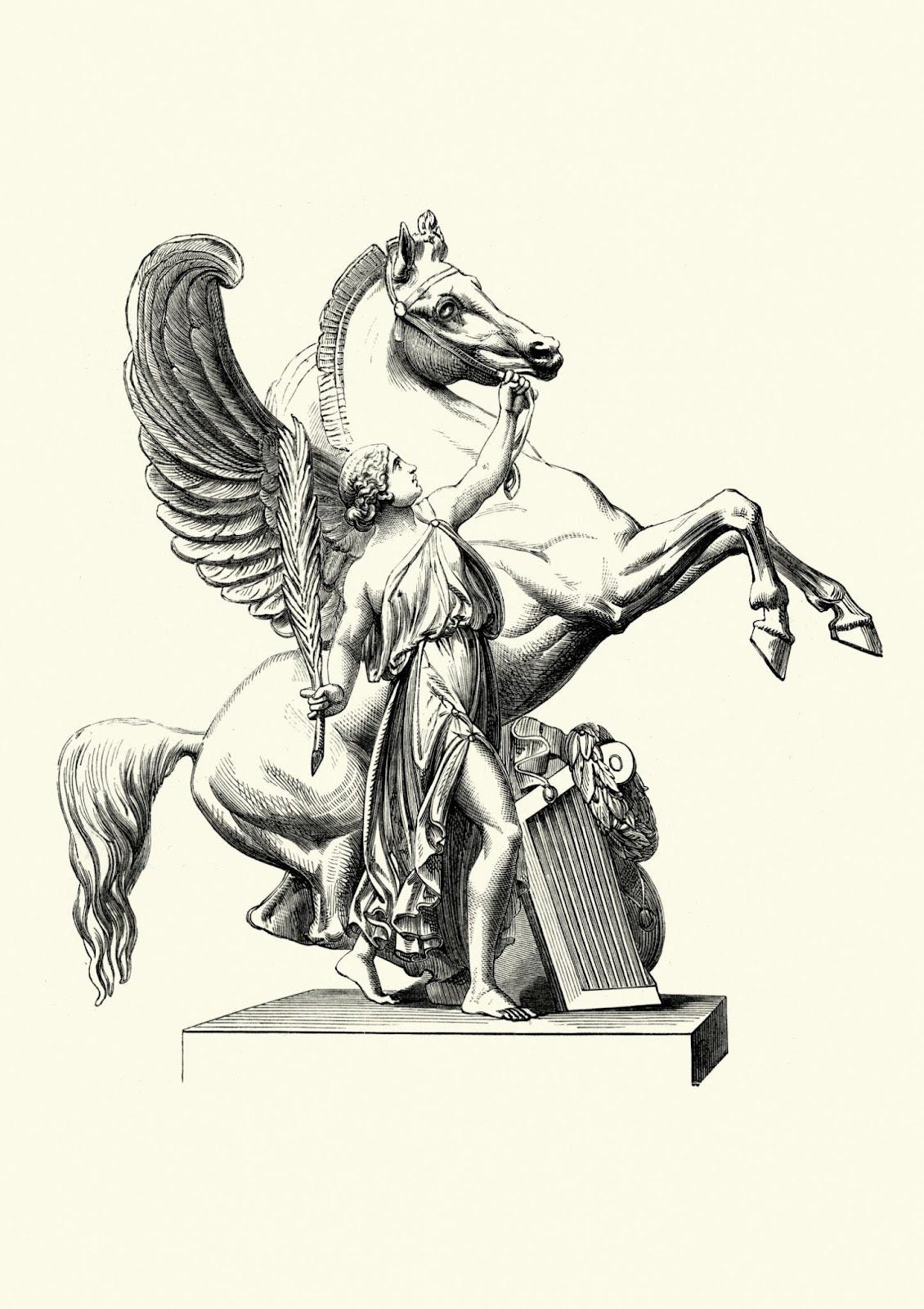
The winged horse Pegasus represents another dimension of this symbolism. Born from the blood of the slain Medusa, Pegasus was not simply a magical creature but a figure of inspiration and transcendence. When Pegasus struck the ground with his hoof, a spring of sacred water burst forth. In this image the horse becomes a mediator between worlds, releasing hidden sources of creativity and insight.
Norse mythology gives us Sleipnir, the eight-legged horse ridden by Odin. Sleipnir could travel between the realms of gods, humans, and the underworld. Here again the horse functions as a vehicle between dimensions, capable of crossing boundaries that ordinary beings cannot.
In darker imagery, the horse appears as an agent of apocalypse. The Four Horsemen of the Apocalypse—war, famine, pestilence, and death—ride forth as forces that reshape the world. The horse becomes the embodiment of unstoppable momentum, carrying events that cannot be halted once they begin.
Across these traditions, one theme repeats: the horse carries power. Sometimes that power elevates, transporting the hero to new realms. Sometimes it destroys, unleashing forces beyond control. Either way, the horse stands for movement driven by instinctual vitality.
This symbolism mirrors a psychological truth. The human psyche contains powerful instinctual drives that propel action, creativity, and ambition. When integrated, these energies become sources of strength. When ignored or mismanaged, they can erupt in destructive ways.
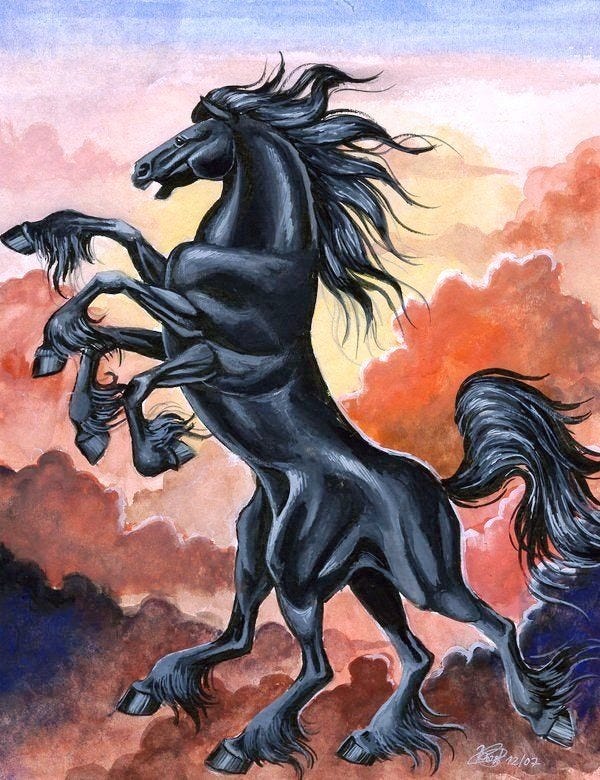
Myths of runaway horses and reckless riders reflect this tension. In the story of Phaethon, the son of the sun god Helios, the young hero insists on driving his father’s solar chariot. Unable to control the divine horses, he veers wildly across the sky, scorching the earth before being struck down by Zeus. The lesson is clear: immense power demands wisdom and maturity.
In this sense the horse archetype represents the dynamic relationship between instinct and guidance. The horse provides the energy; the rider provides direction. Civilization itself can be understood as the ongoing attempt to cultivate this partnership.
Astrological Correspondence: The Horse in the Cosmic Field
Astrology has long mirrored the symbolic themes associated with the horse. In the language of planetary archetypes, the horse corresponds to forces of motion, vitality, and instinctual propulsion that move through the chart.
Within the Hellenistic framework of whole-sign houses, several astrological symbols resonate strongly with the horse archetype.
The first is the planet Mars. Mars represents raw energy, initiative, and the urge to act. Like a spirited horse, Mars moves quickly and decisively, often before reflective thought intervenes. It is the force that charges forward, fueled by instinct and courage. In healthy expression, Mars provides momentum and vitality. When unmanaged, it can behave like a horse that bolts, carrying the rider into conflict or danger.
The sign Sagittarius also carries strong horse symbolism. In classical astrology, Sagittarius is represented by the centaur—half human, half horse. The centaur embodies the union of instinct and consciousness. Its horse body represents primal drive, while its human torso symbolizes awareness and intention. The archer’s arrow, aimed toward distant horizons, suggests the possibility of directing instinctual power toward purposeful goals.
The Ninth House, associated with Sagittarius in the Aries Rising Twelve Letter Alphabet system, further echoes the horse’s theme of travel and expansion. Horses historically enabled long journeys, exploration, and the crossing of vast landscapes. Astrologically, the ninth house governs the search for meaning, wisdom, and horizons beyond the familiar.
The Moon also plays a subtle role in horse symbolism. Horses are highly sensitive creatures, responding intuitively to emotional states. The Moon in astrology governs instinct, feeling, and the body’s internal rhythms. In this sense the horse mirrors lunar responsiveness, reacting to subtle shifts in environment and mood.
The relationship between rider and horse can also be symbolized through Saturn. Saturn represents structure, discipline, and guidance—the bridle that channels raw energy into purposeful direction. In myth, Athena giving humanity the bridle for Poseidon’s horse reflects this Saturnian function. Without structure, energy disperses. With structure, it becomes effective power.
Astrology often reveals the interplay between these forces in an individual’s life. A strong Mars or Sagittarius influence may bring tremendous drive and ambition, much like a powerful horse eager to run. Saturn’s presence may provide the discipline needed to guide that force toward constructive outcomes.
The horse archetype reminds us that vitality alone is not enough. Energy requires relationship with awareness. Astrology describes the patterns through which these energies interact, helping individuals recognize when they are riding their instincts and when their instincts may be carrying them.
Cultural and Astrological Integration
When we place the mythological horse alongside astrological symbolism, a coherent picture emerges. Both traditions describe a fundamental dynamic within human experience: the tension between instinctual power and conscious guidance.
In myth, the horse frequently appears as a gift from the gods. Poseidon’s creation of the horse represents elemental energy arising from nature itself. Athena’s bridle represents human intelligence learning to work with that energy rather than suppress it. Together they symbolize a partnership between nature and awareness.
Astrology expresses a similar pattern. Mars provides the force of action, Sagittarius directs that energy toward meaning, the Moon senses the environment, and Saturn offers structure and restraint. These archetypal elements interact much like the rider and horse in myth.
Culturally, horses have always amplified human capability. Before the advent of modern machines, horsepower was literal. Entire civilizations depended on the strength and speed of these animals. Yet even as technology has replaced horses in practical roles, their symbolic power remains.
The horse still appears in dreams, stories, and imagination as a representation of inner vitality. In psychological language, it often represents the instinctual energies that move beneath conscious thought. Dreams of horses may signal a surge of emotional or creative power seeking expression.
Astrology similarly helps individuals recognize these surges of energy through planetary cycles and transits. A Mars activation may feel like a horse pawing the ground before a race. A Saturn influence may resemble the moment when the rider tightens the reins and redirects the path.
Both systems remind us that energy is neither good nor bad in itself. What matters is the relationship between power and awareness.
When the rider and horse move together, the result is extraordinary. Humanity’s greatest achievements—exploration, artistic inspiration, and acts of courage—often arise from the harmonious alignment of instinct and intention.
When the rider loses control, however, the same forces can lead to destruction. Myths of runaway horses and apocalyptic riders reflect the danger of power unmoored from wisdom.
The horse archetype thus stands as a symbol of dynamic partnership. It calls us to recognize the energies within ourselves that long to move, run, and explore—and to cultivate the awareness necessary to guide them.
Riding the Power Within
The horse has carried humanity across landscapes both literal and symbolic. From ancient battlefields to mythic skies, it represents a force that moves life forward. In cultural traditions, horses appear as companions of heroes, messengers between worlds, and embodiments of unstoppable momentum.
At the psychological level, the horse reflects the instinctual energies that propel human action—desire, vitality, ambition, and passion. These forces are powerful precisely because they arise from deep layers of life.
Astrology offers a map for understanding these dynamics. Through planetary archetypes like Mars and Saturn, it reveals how instinct and discipline interact within each individual’s experience. The chart becomes a symbolic field in which the rider and horse negotiate their relationship.
The horse archetype ultimately asks us to cultivate balance. Energy must be honored, not suppressed. But it must also be guided. When instinct and awareness work together, the result is movement that is both powerful and purposeful.
In this sense, the horse remains one of humanity’s most enduring symbols. It reminds us that life is not a static condition but a journey propelled by vital forces. To live well is not to eliminate those forces but to learn how to ride them.
And when rider and horse move as one, the path forward opens with remarkable speed.