


Previously: Why Most AI Art Has No Aura (And That’s Not the Machine’s Fault).
Some ceramicists dig their own clay. They go out to a riverbed or a deposit in the hills, fill buckets, haul them back, process the material by hand — wedging out rocks and grit, testing plasticity, adjusting the body before the clay ever touches a wheel. If that process is part of their practice, part of their story, part of what makes the work theirs — that is real. That is a legitimate aura choice, and it costs them something: time, labor, the particular frustration of clay that is never quite consistent from one batch to the next.
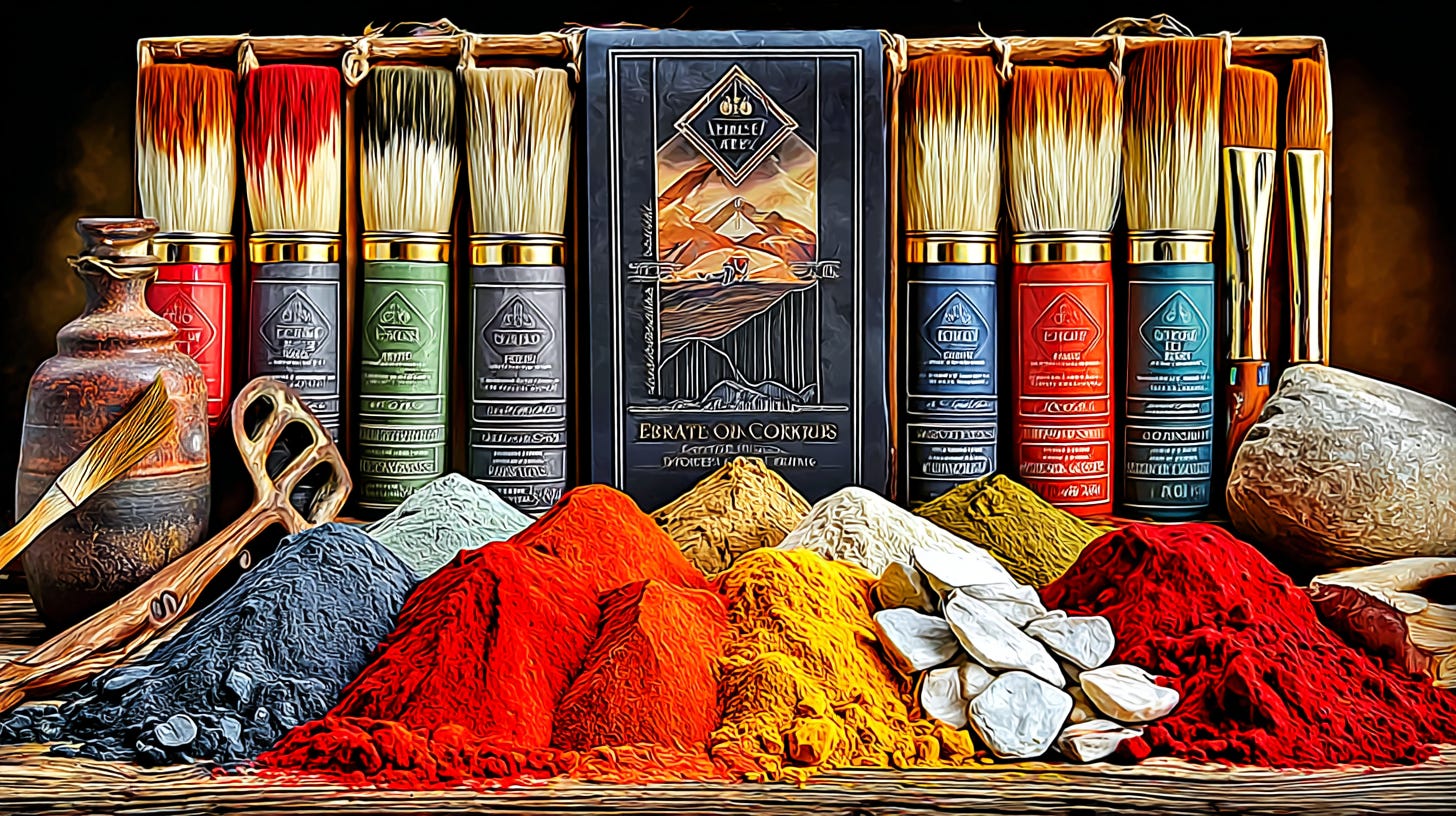
Most ceramicists buy clay out of a bag.
The bags come from a supplier who sources from a mine somewhere, mixes and processes the body to specification, and ships it on a pallet. The ceramicist opens the bag, wedges the clay, throws it on the wheel, and makes something. The work can be extraordinary. The craft can be masterful. The pieces can carry aura — story, intention, presence — that has nothing to do with whether the silica was quarried by the artist or delivered by a truck.
Neither ceramicist owes the other an apology.
This has always been the actual situation with tools in art. Painters who squeeze color from a tube — and tube paint had its critics when it arrived, though whether the controversy was as fierce as the story gets told is hard to say at this distance; the grinding-your-own purists are still around — are not cheating painters who grind their own pigments from raw minerals. Printmakers who use manufactured inks are not inferior to those who brew their own. And if a photographer shoots commercial film stock, what exactly has been surrendered? The degree of material self-sufficiency is an aesthetic decision — sometimes a financial one, sometimes a time one — but it is not the measure of whether something is art.
The question has never been the source of the clay. The question has always been what you do with it.
We are ten posts into this series, and the three words have done their work. Craft is what you put in. Aura is what makes anyone care. The mirror is what AI actually is — not a collaborator in the romantic sense, not a plagiarism machine, but a surface that reflects your material back at you with a particular kind of distortion. That is the whole shape of the argument.
Most AI output fails on craft. Nearly all of it fails on aura. That is an honest assessment, and it has nothing to do with the tool itself. Low-effort work is low-effort work whether you generated it in thirty seconds or labored over it for a week. The same has been true of every other tool handed to a person who wanted to make something without doing the work of making something.
I should tell you something about this series itself before it closes.
Every post in this arc was drafted using an augmented authoring system — ShakespeareAAS — that I built and use in my own practice. The process goes like this: I dictate voice notes on walks, long streams of thinking aloud, sometimes incoherent, sometimes surprisingly clear. The system ingests those notes, routes them through a structured drafting pipeline, and returns draft prose grounded in my dictated material and shaped by a style guide I maintain. Then I revise, cut, expand, approve, and reject until the text is mine in the way that matters — not every word generated by my fingers, but every argument, every example, and every turn of phrase sanctioned by my judgment. Sometimes the revision is light. Sometimes I throw out whole sections that missed what I was actually trying to say.
The irony of writing a series about AI authorship using an AI authoring system is not lost on me. It is, I think, the point.
