



Reading Anita Ashland’s post this morning got me reflecting in lateral channels of thought.
I read the following quote and felt that familiar mix of admiration and resistance.

“Free will is doing gladly and freely that which one must do.”
It’s the kind of sentence that sounds complete. Like it doesn’t need you to add anything. Which is probably why I immediately wanted to argue with it.
Not because I think it’s wrong. I just don’t think it survives contact with certain kinds of experience.
But first — there’s something I want to name about the quote before I complicate it.
By Jung’s own framing, it is just as much free will to be a sourpuss. To drag your feet. To do what must be done with a clenched jaw and zero enthusiasm. The action is identical. The emotional tone is different. So if both are free will, then the quote isn’t actually defining freedom — it’s expressing a preference for a particular emotional flavor of it. It smuggles in a value judgment and calls it a definition.
That matters. Because once I see it, I can’t unsee it.
And then trauma complicates things further.
There are states of experience where the nervous system is not choosing between joy and resentment. It’s choosing between survival strategies. Fight. Freeze. Appease. Endure. In those states, the body moves first and philosophy arrives much later — if at all. The idea that gladness is accessible, that it’s just a matter of orientation, assumes a nervous system that isn’t already running threat detection in the background.
Trauma doesn’t wait for philosophy. It just narrows the field.
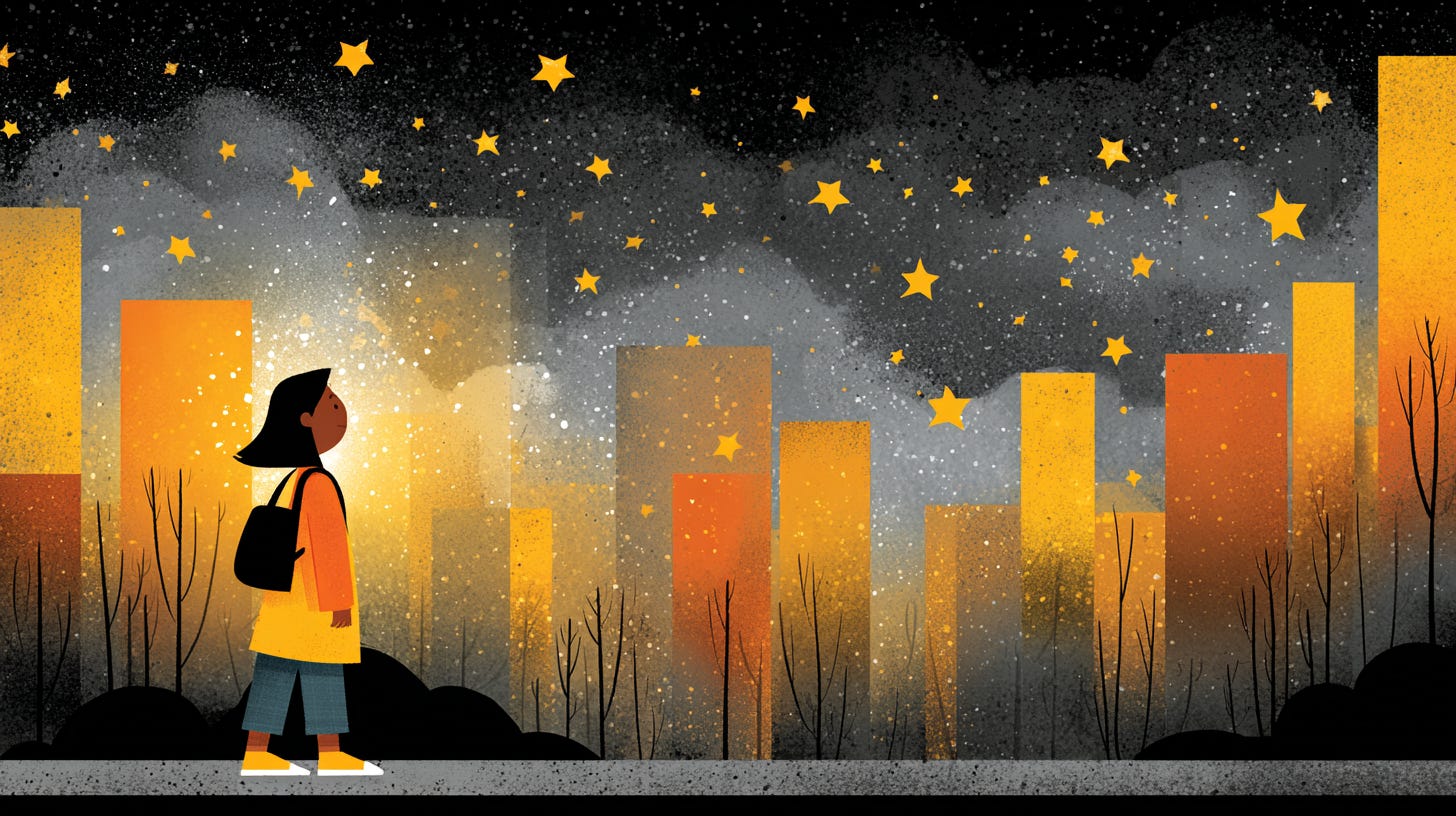
There were years of my life when “doing what one must do” wasn’t philosophical. It was relational. Immediate. Charged.
I was in a relationship where compliance wasn’t the issue. I could comply. I did comply. The issue was tone. Energy. Brightness.
Obedience had to look happy.
If I agreed but didn’t glow, it was questioned. If I fulfilled a request but stayed quiet, that quietness became the problem. It wasn’t enough to act. The emotional atmosphere had to be maintained. Harmony depended on it.
I didn’t have language for it then, but I can see now how much of my nervous system was involved. Smiling shortened arguments. Softening my voice lowered the temperature. Being agreeable made things smoother.
That wasn’t gladness. It was calibration.
And in that context, Jung’s sentence starts to sound less like wisdom and more like a demand I’d already been living under.
There were moments in that relationship when I did what was asked but couldn’t bring myself to decorate it. No extra warmth. No added sparkle. Just the action.
Those moments caused friction.
And strangely, they’re the ones that felt steadier inside me. Not powerful. Not defiant. Just — something in me wasn’t disappearing. The lack of positivity felt more like free will than the forced smiling ever did.

This is where I keep returning to a distinction that feels important to me — the old language of microcosm and macrocosm.
The macrocosm is everything outside: circumstance, relational expectation, the emotional climate others require, the structures of power and demand we move through. That’s real. It shapes behavior. It shaped mine.
But the microcosm is the interior field. The inner qualities I actually possess — the ones I was given, the ones I formed, the ones trauma altered, the ones I’m still sorting out. And free will, I think, is fundamentally nuclear. It lives there — in the microcosm — at the densest, most central point of what makes me me.
Not everyone’s inner qualities are the same. Trauma changes the architecture of the interior. It reduces access to certain responses and heightens others. Some people inherited emotional spaciousness; some inherited vigilance. We don’t start on equal footing, and we don’t end there either.
But whatever we have inside — it’s fully ours. We each have 100% of our own interior landscape. Even if that landscape is scarred or reactive or unfinished. And it is with those inner qualities — exactly those, no substitutions — that we express and experience and engage free will as a fundamental part of exploring our own consciousness.

So if free will is nuclear — if it lives in the microcosm — then what activates it?
I keep landing on awareness.
Without awareness, there is still will. People act all the time. They comply, resist, perform, endure. But if I can’t see what is moving through me as I act — if I can’t recognize the fear response, the appeasement pattern, the survival strategy dressed up as cooperation — then I’m not sure I can call it free.
There may be a will. There may be a way. But it isn’t necessarily free unless awareness comes with it.
In that relationship, I often wasn’t free. I was adaptive. That’s different.
The adaptation looked like gladness from the outside. It sounded like cooperation. But inside it felt like contraction — like slowly learning to make my voice lighter than what I actually felt.
And the moments that felt most like mine? They weren’t the polished ones. They were the ones where I couldn’t manufacture the smile. Where something in me refused to perform on command. Where my neutrality, however awkward, was at least honest.
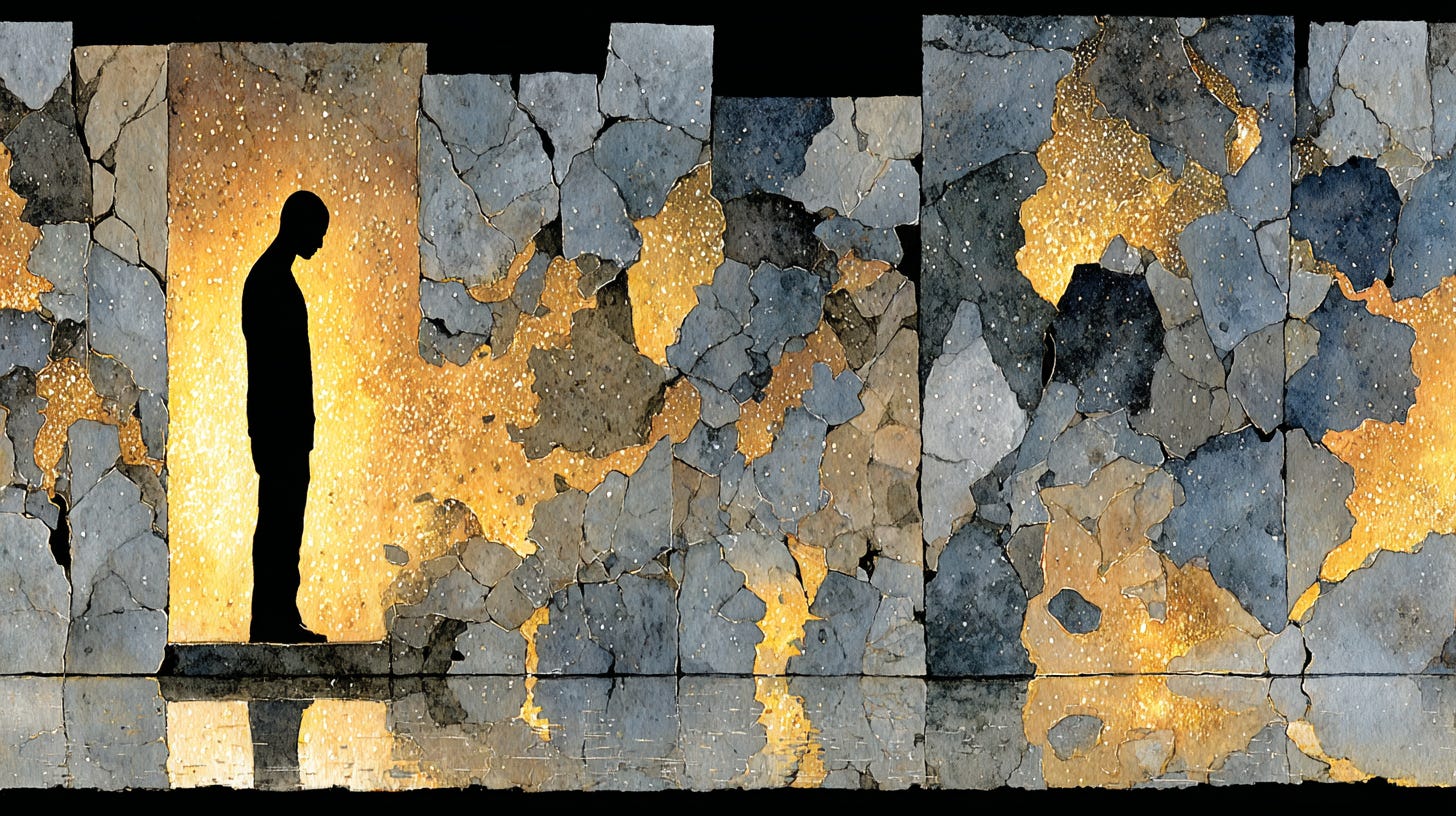
I don’t fully reject Jung’s sentence. I can see what it reaches toward — the dignity of acceptance, the grace of moving through necessity without bitterness. That’s real.
But I can’t ignore the shadow side of it.
Because I have lived in a space where gladness was required, and the requirement itself was a form of control. In that context, forced positivity wasn’t freedom — it was the mechanism of the opposite.
Sometimes doing something gladly is freedom.
Sometimes doing it without pretending is.
And sometimes neither option feels free, just less constricting than the other.
I don’t have a clean ending for this. Only this: when I look back, the moments that feel most like mine are not the ones where I perfected the emotional tone of my compliance.
They’re the ones where something inside me stayed visible to myself.
Even if no one else saw it.