


When people first hear “malefic enclosure,” they usually hear a verdict. A bad condition. A warning label. Something that implies the native is doomed to suffer the significations of the planet involved.
But that isn’t how traditional technique actually works in practice—not if we’re paying attention to quality rather than superstition. A malefic enclosure describes how a planet has to operate. It describes constraint, pressure, concealment, deprivation of resources, and a narrowing of options. It doesn’t automatically describe moral outcome or personal affliction, and it certainly doesn’t guarantee that “bad things” happen to the person. Sometimes the enclosure becomes the exact container that makes the native’s greatest work possible.
A clean example of this is Adolfo Kaminsky, born October 1st, 1925 in Buenos Aires, later known for his work forging documents for the French Resistance during World War II—work estimated to have saved over 14,000 lives.
We don’t have a confirmed birth time for him, which immediately changes how we delineate. Without angles and reliable houses, we lean on universal significators. We can still do real astrology here, but we have to be honest about what we’re doing: we’re reading planetary condition and aspect as the primary framework, not extracting a house-based career narrative as though noon charts are literal. The point isn’t “what was his Midheaven,” the point is “what do these planets signify, and how do their conditions describe the way his life expresses them.”
The chart below is set for 12 noon so house positions should not be considered.
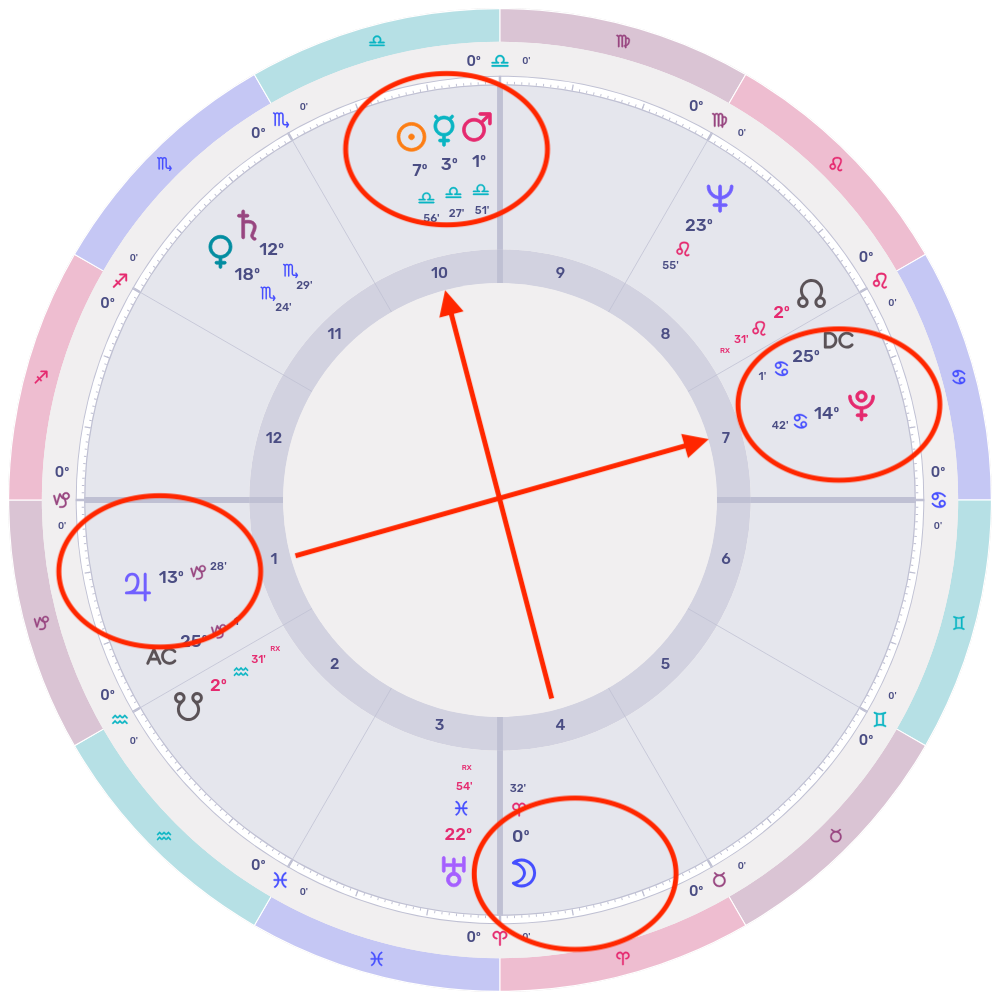
This chart was generated with Luna Astrology. You can support my work by subscribing to Luna Astrology using this link: Try Luna Astrology.
What a Malefic Enclosure Actually Means
In a birth chart, Mercury is the universal significator of documents, writing, communication, bureaucracy, permits, borders, administrative systems—all the things that make a modern state function, and all the things that a totalitarian regime weaponizes.
A “malefic enclosure,” traditionally, is when a planet is contained or besieged by malefic influences so that it cannot operate freely. The key idea isn’t punishment; it’s constraint. The planet still signifies what it signifies. But it has to signify it through pressure, through narrowing, through conditions that feel like deprivation.
In Kaminsky’s chart, the Sun, Mercury, and Mars are all in Libra: Sun at about 8°, Mercury around 4°, Mars around 2°. We also have the Moon opposing that cluster. Mercury is tightly bound into a compressed zone of activity, and the chart screams a specific signature: Mercury forced to operate under diminishing conditions.
Now, here’s a crucial doctrinal move being made in this delineation, and it’s the one people miss if they treat dignities like moral or fortunate labels.
Why the Sun Is Functioning as Malefic Here
The Sun in Libra is in its fall. In fall, a planet doesn’t “disappear.” It loses access to its inherent resources—its exalted capacities, its easy authority, its natural strength. The solar principle becomes compromised. It cannot operate cleanly through legitimacy, recognition, or sovereignty.
But there is a second layer: the Sun’s light is not neutral. Even when we’re not talking about combustion by exact degree, the conceptual doctrine matters: the Sun’s brilliance can drown out the visibility of other planets. When planets are too close, they lose their light. They become harder to see. Their expression becomes hidden, compressed, forced inward, or pushed into conditions where they must act without being witnessed.
So in this delineation, the Sun is treated as malefic not because “the Sun is bad,” but because in fall it lacks its own stable authority, and by its nature it deprives nearby planets of visibility. In other words: the Sun here participates in the enclosure by acting as a diminishing force—not in the sense of luck, but operationally. It reduces Mercury’s ability to express openly.
If someone wants a single sentence that captures the doctrine: the enclosure doesn’t change what Mercury signifies; it changes the conditions under which Mercury can do its job.
And Then We Watch the Life Do Exactly That
Now look at the biography—not as a feel-good story with astrology pasted on top, but as the literal lived expression of Mercury under pressure.
In 1943, Paris is occupied. The Gestapo and the occupation apparatus are systematically identifying and deporting Jews. The primary weapon is paperwork: identity documents, ration cards, travel permits. The system is bureaucratic by design. And on Jewish identification papers, the word “JUIF” is a death sentence.
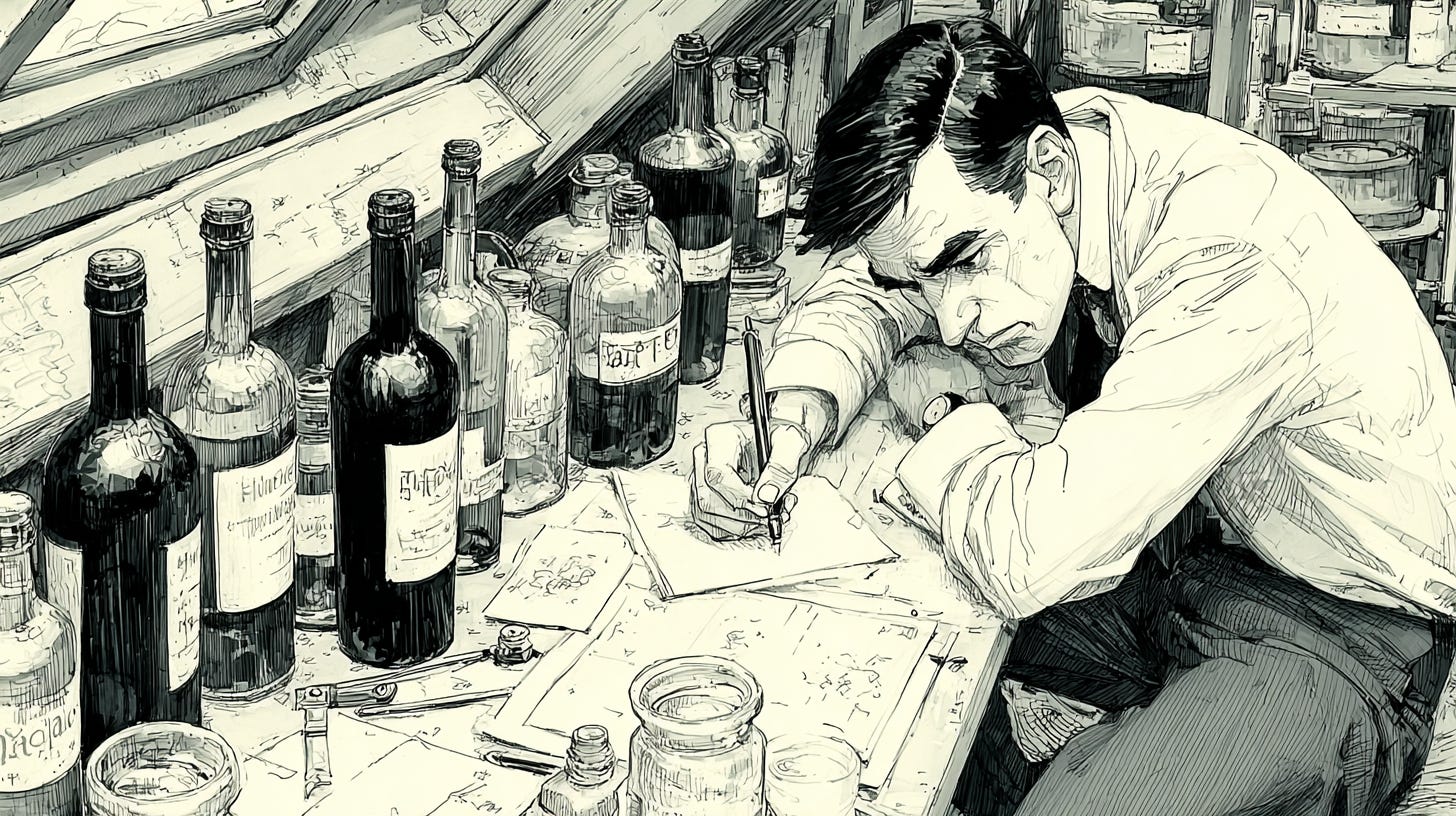
Kaminsky isn’t a soldier. He isn’t a politician. He’s an apprentice dyer in a textile shop—someone whose daily life is already Mercury-coded: inks, pigments, solvents, acids, the molecular behavior of color and paper. And then the Resistance brings him a question that is pure Mercury under siege:
Can you remove the stamp without destroying the document?
Most forgers couldn’t. The ink was meant to be permanent. Attempts to erase it damaged the paper fibers and exposed the forgery. But Kaminsky remembers something from his dye work: lactic acid dissolves the specific blue ink without destroying the paper beneath.
This is the positive manifestation of enclosure: Mercury still does Mercury things—documents, inks, technical precision, bureaucratic imitation—but it does them under exact conditions of pressure, concealment, and life-or-death constraint. The enclosure doesn’t ruin Mercury. It makes Mercury surgical.
And notice what the story keeps emphasizing, because the story is delineating the chart for us: he works in a hidden attic laboratory, under dim light, with chemical fumes burning his eyes and throat, fingers stained with ink, producing documents intended to subvert an oppressive administrative regime. Long hours. No recognition. No public credit. No pay—by choice or by necessity, the condition is still the same: Mercury operating under suppression, invisibility, and diminishment.
That is the enclosure.
“Malefic” Does Not Mean “Bad Outcome”
This is the teaching point of the entire delineation: a malefic condition is not automatically a prophecy of personal ruin. It is a description of the quality and container of experience.
Mercury in a pressured enclosure can show dishonesty, fraud, manipulation, and criminality—yes. That’s one expression. But in this case, the same configuration shows something else: documents forged to save lives, deception used as a moral technology, bureaucracy hacked as an act of justice.
This is why a chart has to be read as lived reality rather than as a set of labels describing luck. The same astrological condition can manifest in radically different ethical directions depending on the person, the context, and what the soul chooses to serve.
If you want a clean way to say it: malefic enclosure describes constraints.
The Moon Opposing the Cluster: The Cost of the Work
We also have the Moon opposing the Sun–Mercury–Mars group. When the Moon opposes Mercury and Mars, it’s hard to separate emotional life from urgent labor. The body becomes the battlefield. Sleep becomes a liability. The nervous system stays activated because the stakes remain immediate.
Kaminsky reportedly did the math: if each document took two minutes, he could make thirty documents an hour—thirty chances at survival. And then comes the brutal equation: every hour he sleeps, thirty people might die.
That isn’t just a dramatic line. It’s a perfect expression of Mercury and Mars under pressure, with the Moon holding the emotional cost of the calculation. The opposition doesn’t romanticize sacrifice. It describes the strain of a life lived with no margin.
And then we see it in the story of the 300 children—papers forged over two to three days without stopping so they wouldn’t be deported to Auschwitz. He collapses from exhaustion, wakes in panic, and goes back to work.
This is enclosure again: not a gentle life, not a free life, not an easy Mercury. Mercury functioning brilliantly inside a narrow, burning corridor.
Jupiter Opposite Pluto: The Scale of Subversion
There’s another layer in the chart that explains why this isn’t “a few forged papers” but a mass historical effect: Jupiter in Capricorn opposing Pluto in Cancer.
Capricorn is power structures: states, hierarchies, institutions, official systems. Jupiter amplifies what it touches: scale, magnitude, reach. Pluto signifies overthrow, subversion, irreversible transformation. In Cancer, Pluto is keyed into survival, family lines, protection of life, continuity.
The axis describes a collision between institutional authority and existential necessity. It speaks to the overthrow of power structures through sustained, expanding activity—Jupiter’s amplification of Plutonic subversion. And if you want to connect it directly to the biography without drifting into abstraction: fourteen thousand lives is Jupiter-scale. Forged documents used to dismantle the state’s ability to totalize identity is Pluto’s method.
Again, none of this requires “good planets” to do “good things.” It requires accurate delineation of planetary significations under specific conditions.
What This Delineation Teaches
Mercury often universally signifies documents, bureaucracy, and borders.
Mercury under diminishing conditions may signify secrecy, hidden work, pressured precision, and life lived in narrow margins.
The Sun in fall can operate as a functional malefic and as a diminishing force.
Mars bound into the same space is the other side of the enclosure and can signify endurance, relentless effort, and the body being used as the tool as a way that the pressure gets released.
The Moon opposing it all describes cost—strain, exhaustion, and the emotional reality of never being able to disengage.
Jupiter–Pluto describes the scale and the method: expanded subversion of power structures in service of survival.
And the central point: a malefic enclosure does not mean the native is doomed, unlucky, immoral, or fated for “bad events.” It means the planet’s significations will show up through constraint. Sometimes that constraint breaks people. Sometimes it forges them into instruments capable of doing work they could never have done under easier skies.
Kaminsky’s life shows the positive manifestation clearly: Mercury was pressured, hidden, besieged—and because of that, it became exact enough to save lives.
After the war he became a photographer, lived quietly, and said little for decades. The work remained largely unrecognized in public life. That too is part of the signature: not just what he did, but how it had to be done—under the beams, in concealment, without legitimacy, without applause.
And that’s what delineation is for.To describe the shape of a life accurately enough that we can recognize how astrology emanates through biography—how planets don’t moralize, they signify, and how even the hardest conditions can become the exact container that makes an extraordinary life possible.