


We’re living in a moment where the distance between science fiction and the nightly news has collapsed. Not metaphorically—structurally. The language, the pacing, the stakes all feel the same. What used to belong to speculative futures is now being rehearsed in press conferences and policy rooms.
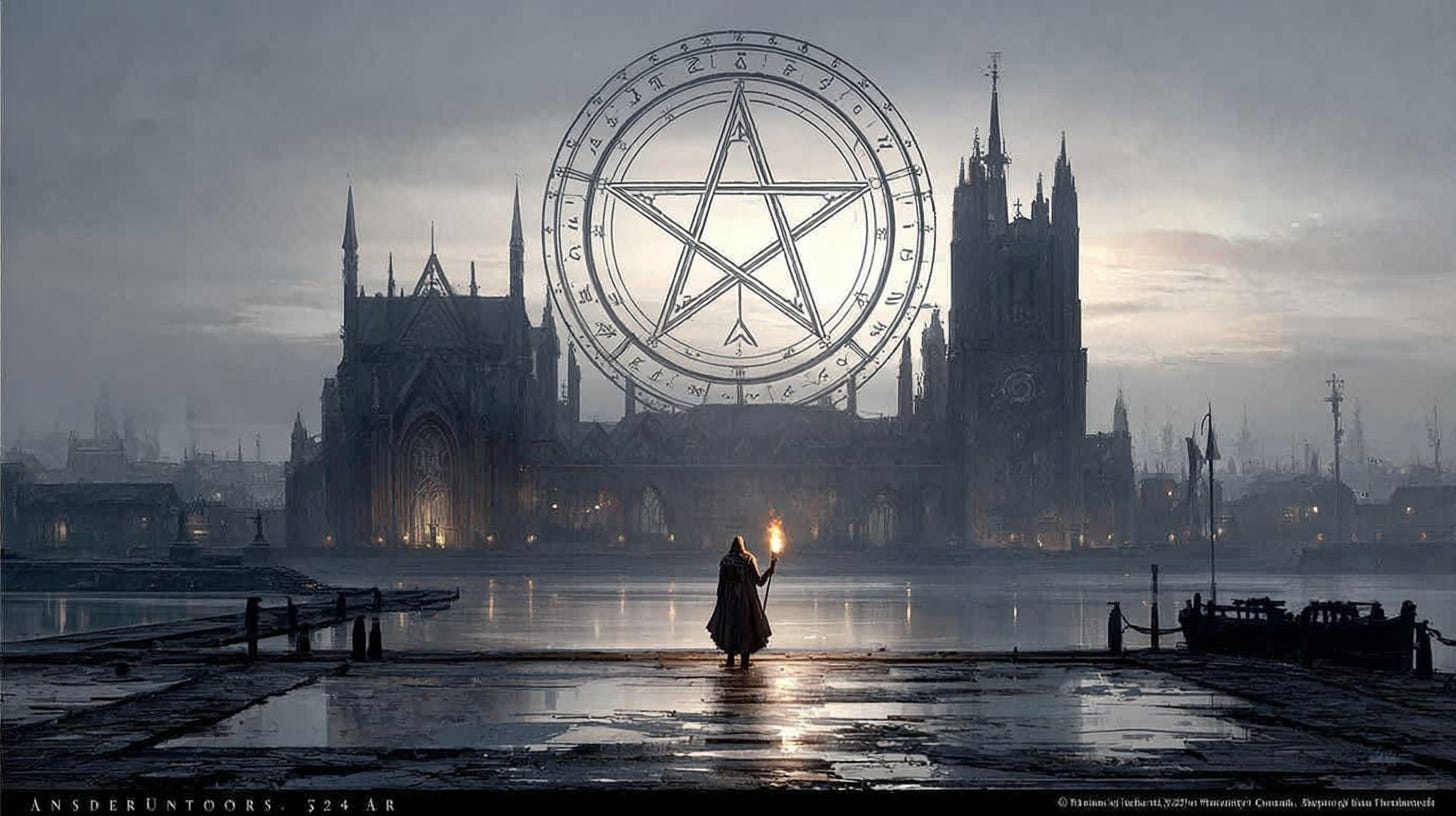
If you track the last month alone—the smoke still hanging over Minneapolis, the quiet reconfiguration of alliances at Davos, the open discussion of centralized “Boards of Peace”—there’s a shared undertone running through it all. A sense that the global order is no longer being adjusted, but re-written. Not gradually. All at once.
This is what rupture feels like from the inside.
In my work at Craft of Moon, I’ve been tracking the rise of what I call hegemonic power. Not as a partisan critique, and not as a conspiracy, but as an archetypal pattern that surfaces when systems are under existential stress. It’s a pattern with a long memory. And it always announces itself the same way: through promises of stability, unity, and protection—offered at the price of autonomy.
To understand what’s happening now, we need to look at the shadow of that pattern. And to understand why now, we need to look at the timing written into the sky.
Shadow of the Hegemon: The Script
In Orson Scott Card’s Ender universe, there’s a lesser-discussed novel called Shadow of the Hegemon. It takes place after catastrophe, when the world decides it cannot survive another global crisis without central coordination. The solution is the Hegemon: an office designed to unify humanity under a single, rules-based authority capable of preventing chaos before it spreads.
The premise is clean. Rational. Almost comforting.
And that’s the point.
The Hegemon isn’t framed as a villain. It’s framed as a necessity. Power consolidates not through brute force, but through consent shaped by fear. Individuals don’t feel conquered—they feel relieved. Someone else is finally in charge.
This script isn’t fictional. It’s archetypal. It reappears whenever fear outweighs trust in decentralized human agency. And we’re watching it re-emerge now, almost beat for beat.
Whether it’s political leaders openly discussing the end of American hegemony, or the formation of exclusive, invitation-only global coalitions funded by unimaginable wealth, the pattern is consistent: power is being aggregated upward, away from individuals and local communities, into fewer and fewer hands.
Astrologically, this is Pluto in its purest form. Not just power, but survival power. Wealth as control. Authority justified by the promise of protection. In traditional language, this is plutocracy—rule by those who command the resources that determine life and death.
Why This Pattern Is Activating Now
Pluto doesn’t move quickly, and it doesn’t repeat itself often. Its nodal axis remains in the same signs for centuries, shaping the deep habits of civilization rather than the moods of a generation.
For nearly two thousand years, the collective default has been Capricornian: hierarchy, institutional authority, top-down control, and rigid structures designed to outlast individual lives. This is the inherited shadow of the state—the assumption that order must come from above.
At the same time, the collective hunger has shifted. Pluto’s North Node pulls toward Cancer, toward safety, home, belonging, and protection. After generations of grinding pressure, people are exhausted. Nervous systems are stretched thin. The desire for containment is real and legitimate.
But here’s the trap.
When fear is amplified, and the need for safety becomes acute, Cancerian longing can be weaponized. The promise becomes seductive: submit to the structure, and you will be protected. Freedom is reframed as recklessness. Autonomy is cast as danger. The state offers to become the parent.
This is how the shadow of the Hegemon enters—not through violence, but through reassurance.
The Cardinal Tension: Where It Breaks
This Cancer–Capricorn axis doesn’t exist in isolation. It forms a cardinal square with Aries and Libra—the axis of personal agency and relational equality.
Aries is the spark of selfhood, the irreducible “I am.”
Libra is the social contract, the “we are” rooted in balance and consent.
When Capricornian systems expand in the name of Cancerian security, friction is inevitable. Personal sovereignty feels compressed. Relationships begin to reorganize around compliance rather than choice. What’s framed as integration at the global level is experienced as subordination at the personal one.
This is why so many people feel a low-grade but persistent pressure right now. Not panic—pressure. The sense that something is asking to be yielded, negotiated, or surrendered.
That sensation isn’t confusion. It’s accurate perception.
Navigating the Rupture Without Losing Yourself
We can’t halt a multi-century Pluto cycle. But we can decide how it lives inside us. This is where the real work is.
First, regulate the self. Hegemonic systems feed on dysregulated nervous systems. Fear collapses discernment and makes submission feel reasonable. When you recognize these events as archetypal processes rather than personal emergencies, something settles. You move from reflex to orientation. The news loses its hypnotic charge.
Second, maintain autonomy where it’s real. The Cancerian hunger for protection is understandable, but true safety is local and embodied. It lives in skill, presence, and relationship. In knowing how to respond rather than waiting to be managed. No centralized authority can replace competence, community, or inner coherence.
Third, refuse the false choice. The oldest trick of hegemonic power is division—convincing you that your safety depends on another’s exclusion. This is the distortion of Libra. Harmony that requires an enemy isn’t harmony; it’s leverage. Balance only exists where freedom exists on both sides of the scale.
What Rupture Is Actually For
Pluto doesn’t destroy for sport. It breaks things open because they can no longer contain what they’re carrying. A rupture is a failure of structure—but also an invitation to re-form at a deeper level.
The shadow only dominates when it remains unnamed. Once you can see the script, it loses its inevitability. You don’t need to overthrow the world to remain sovereign. You only need to stay awake inside it.
The rupture is here. It’s disruptive, Plutonic, and unmistakable. But rupture is also a breaking open. And inside that opening, something else becomes possible—something less centralized, less fear-driven, and more human-scaled.
Keep your eye on the sky. Stay rooted in what’s local and real. And don’t let the promise of safety cost you your fire.